While some German brewers make beer that flouts the Reinheitsgebot, many more are committed to brewing within its strictures while employing creative tactics, like adding hop varieties that mimic flavors of prohibited ingredients.
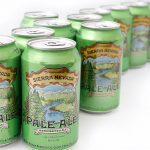
Once an industry staple, Pale Ale has ceded shelf space to the popular IPA and its Imperial and Session cousins. Has the former flagship style seen its last days, or can it be reborn with a renewed emphasis on hop and malt varieties?
In states with farm brewery licenses, adding a brewery gives farmers the ability to use their crops in a product that they can sell directly to consumers, thus creating a new revenue stream, bringing tourism to the farm and forging a sense of community.
When creating the Double IPA’s label art, capturing the evolution of a brewer into a hop monster in a single image took about three months of collaboration between the Florida brewery, its branding agency and an illustrator.
Located in a tiny town in rural Oregon, Steens Mountain Brewing is one of the state’s smallest breweries. Most of its beers are brewed with hops owner Richard Roy has discovered in the wild.
The history of British hop strains Goldings and Fuggles has long been shrouded in mystery. Will new evidence reveal the identities of the people who lent their names to this pair of influential varieties?
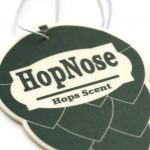
You know those ubiquitous tree-shaped auto air fresheners? HopNose is similar, only it looks like a giant hop cone and smells like Chinook hops—still piney, but with a more resinous hop smell than Christmas trees.
Hydroponic growing techniques have existed since the early 17th century. These methods have already changed the way vegetables can be grown across the world, but why hasn’t anyone tried to grow hops this way?
American brewers win at European awards; wild hop variety makes commercial beer debut; SweetWater to build West Coast brewery; Wynkoop revives Beer Drinker of the Year awards; Bill Siebel passes away at 69; and Constellation Brands to acquire Ballast Point.
Think of the packets as mini beer Randalls. Bobby Gattuso, who studied biology in college, invented Hop Theory beer sachets as a way to enhance beers and start conversations about different flavors in beer.
Today, lemony Berliner Weisses and salty-sour Goses are the rage, while new hop varieties and brewing techniques allow bitter, aromatic IPAs to dominate tap lists and beer fridges. Given the speeding popularity of both categories, it was merely a matter of time before sour met hoppy in a head-on collision.
Bale Breaker Brewing is the creation of siblings Meghann Quinn, Patrick Smith and Kevin Smith, whose family started growing hops in Washington’s Yakima Valley back in 1932. They founded Bale Breaker in 2013, with help from Kevin Quinn, Meghann’s husband.
The Age of IPA has signaled an end of creativity and experimentation. Based around a handful of hot, new hoppy styles with similar characteristics, we’re in a time of creeping homogeneity.
A collaboration between Good People Brewing Co. and Jones Valley Teaching Farm has managed a counterintuitive feat: spreading beer education to adults and food education to youth at the same time.
Carlsberg’s Carl Jacobsen had clearly been impressed by what he’d seen on his travels and brought back an enthusiasm for British ales. So much enthusiasm that he started brewing ales alongside the lagers you would expect.
Don’t let the names confuse you. Aroma compounds are being engineered into your beers, so think about them the next time you smell a hop bomb. Does your nose detect anything besides that hop character?
The American hop market seldom finds a comfortable equilibrium for very long, simply because as essential as hops are in brewing beer, they serve almost no other commercial purpose.