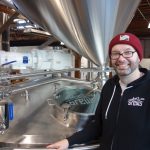
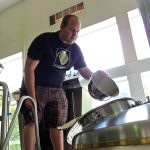
Reuben’s Brews, which already maintains three locations in Seattle, is growing again. In December it adds an even larger 30-barrel production facility with a bright new taproom.
Authors Brandon Fralic and Rachel Wood talk about their writing process, and revisit a few memories from the months of work they put into their first book, Beer Hiking Pacific Northwest.
From Washington to Tennessee, barbershops across the US that have embraced the relationship between local beer and the barber’s chair say the bond has proven to be a boon for their business.
Washington’s oldest and largest craft brewery plans to tackle slowing sales by taking a cue from the hyper-local breweries that have appeared in its wake. Enter Brewlab, Redhook’s new brewpub focused on innovation.
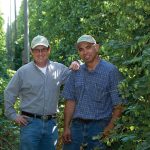
Determined to connect farmers and brewers, third-generation hops farmer John Segal rebuilt his family’s business—the first to commercially cultivate Cascades.
After 5 years of running the brewery like a commercialized homebrew venture and sweating out 10-gallon batches, Tacoma Brewing moved into a new, larger space in May 2017.
Chuckanut opened its second location, the South Nut, in the heart of the fertile Skagit Valley, within walking distance of some of the best grain—and grain research—in the country.
These days, many breweries produce gluten-free beers, and still more offer sour ales, but very rarely has a brewery offered a single beer that qualifies as both.
Marley Rall opened The Brewmaster’s Bakery and Taproom to serve beer from Seattle-area breweries alongside baked goods she makes with their spent grain.
The Pacific Northwest offers a multitude of options for thirsty beercationers, from Oregon’s mountain biking brew tours to brewery cruises through Washington’s San Juan Islands.
In just a couple of years, Adam Robbings matriculated from homebrewing newbie to brewmaster and co-owner of Reuben’s Brews, named after Robbings’ son, Reuben.
Is the link between the growth of recreational marijuana and craft breweries just a bit of cosmic, double-hopped coincidence? Cultural and economic factors could explain the evolving connection.
Bale Breaker Brewing is the creation of siblings Meghann Quinn, Patrick Smith and Kevin Smith, whose family started growing hops in Washington’s Yakima Valley back in 1932. They founded Bale Breaker in 2013, with help from Kevin Quinn, Meghann’s husband.
With the opening of Mantra Artisan Ales in Nashville later this year, Maneet Chauhan joins a growing number of well known chefs like Rick Bayless and John Howie who are turning their attention to the brew kettle.
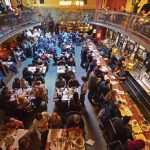
This pub, which has 64 beers on draft and more than 300 in bottles (not to mention over 60 varieties of Scotch), often devotes most of its taps to special events, like Bigwood, a celebration of barrel-aged beers from Stouts to sours, and Hardliver Barleywine Fest.
The American hop market seldom finds a comfortable equilibrium for very long, simply because as essential as hops are in brewing beer, they serve almost no other commercial purpose.
Two new hop processing operations—one in Washington’s Yakima Valley and another facility-in-planning in Virginia—seek to provide brewers with a quality product and a shorter turnaround time.
Seattle’s love affair with good beer began in 1981 in the city’s Ballard neighborhood, where Redhook converted an old auto repair shop into its original brewery. Other breweries soon sprang up, and by the end of the 1980s, the local craft beer had secured a permanent place in the city’s beverage landscape.
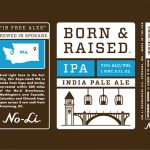
On No-Li’s labels, the sleek layout is the framework, but the illustration is the heart of the design: highly figurative, graphic images that convey a message about what the beer represents.
A manufacturing engineer by day, Permen applies the logic of inputs and outputs to homebrewing. As scientific as that sounds, Permen credits his Homebrewer of the Year win mostly to luck.
Post office may permit mailing of beer and wine; Alchemy & Science preparing to conduct craft beer chemistry; Dave Farnworth passes away; Michigan now tagging kegs with bar codes; and November elections bring changes to alcohol laws in Georgia and Washington.
However a brewer chooses to describe his beer, he probably won’t use the word “umami” … unless that brewer is Cody Morris. The man behind Seattle’s Epic Ales is more interested in pushing the boundaries of what beer can bring to the dinner table rather than brewing to traditional styles and expectations.